 |
pure-cpp 1.0.0
A C++ physics simulation benchmark comparing performance with Python implementations
|
|
pure-cpp 1.0.0
A C++ physics simulation benchmark comparing performance with Python implementations
|
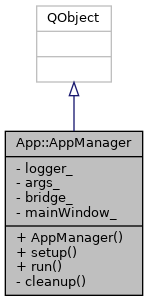
Orchestrates the application's lifecycle: setup, execution, and cleanup. More...
#include <app_manager.hpp>
Public Member Functions | |
| AppManager () | |
| Constructs the application manager and sets application-wide metadata. More... | |
| bool | setup () |
| Sets up all application components before running. More... | |
| int | run () |
| Runs the main application event loop. More... | |
Private Slots | |
| void | cleanup () |
| Performs cleanup after the event loop has finished. More... | |
Private Attributes | |
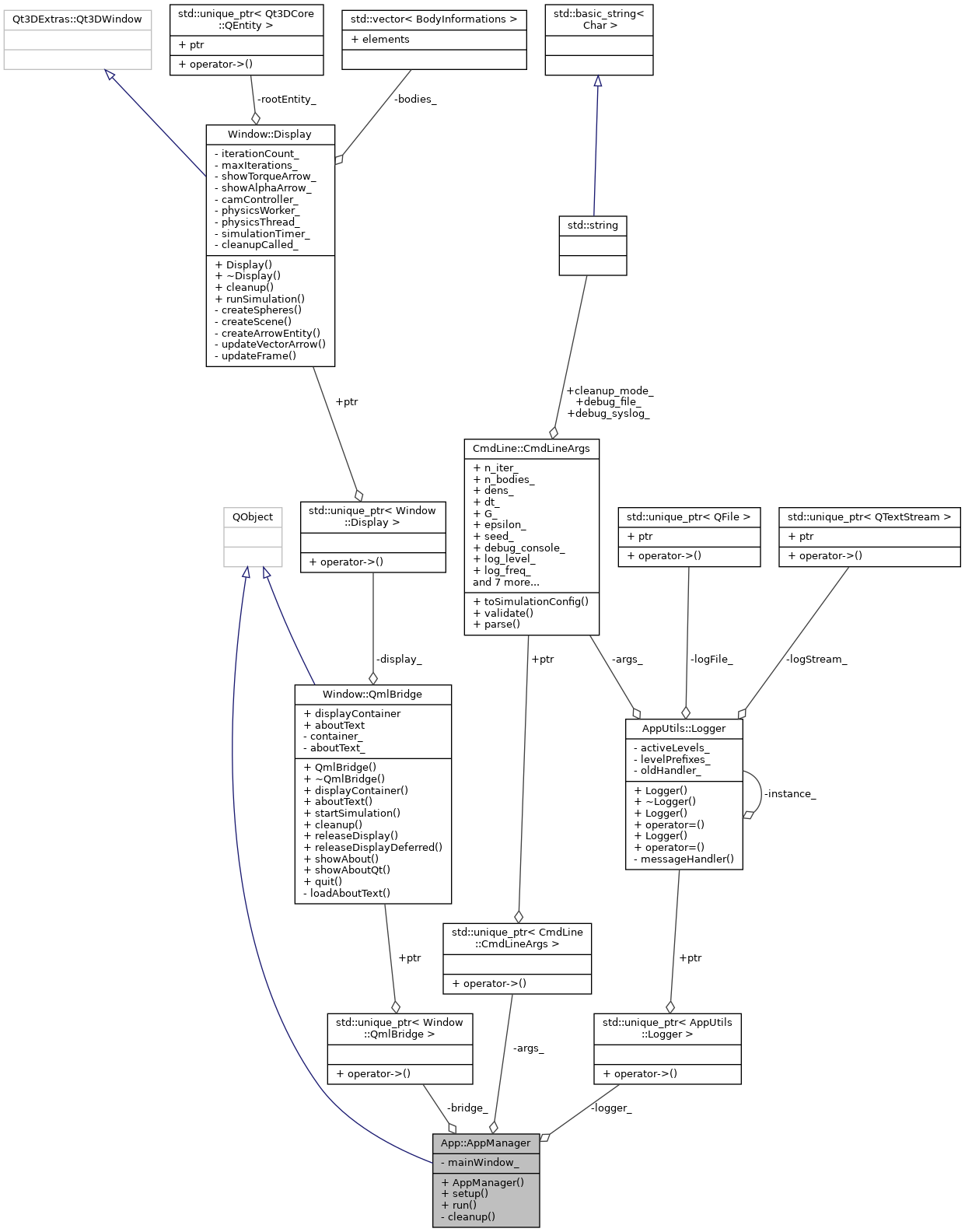
| std::unique_ptr< AppUtils::Logger > | logger_ |
| The logger for the application. More... | |
| std::unique_ptr< CmdLine::CmdLineArgs > | args_ |
| The command line arguments for the application. More... | |
| QPointer< Window::QmlBridge > | bridge_ |
| The QML bridge for exposing C++ functionality. More... | |
| QMainWindow * | mainWindow_ |
| The main window (stored for proper cleanup order). More... | |
Orchestrates the application's lifecycle: setup, execution, and cleanup.
This class encapsulates the initialisation of translations, argument parsing, logging, and the QML interface, simplifying the global main() function.
Definition at line 26 of file app_manager.hpp.
| App::AppManager::AppManager | ( | ) |
Constructs the application manager and sets application-wide metadata.
Definition at line 26 of file app_manager.cpp.
|
privateslot |
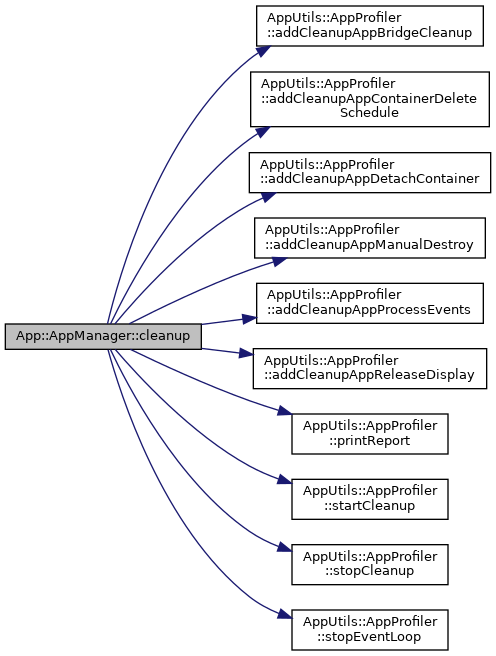
Performs cleanup after the event loop has finished.
Two modes are supported via –cleanup-mode:
Definition at line 151 of file app_manager.cpp.

| int App::AppManager::run | ( | ) |
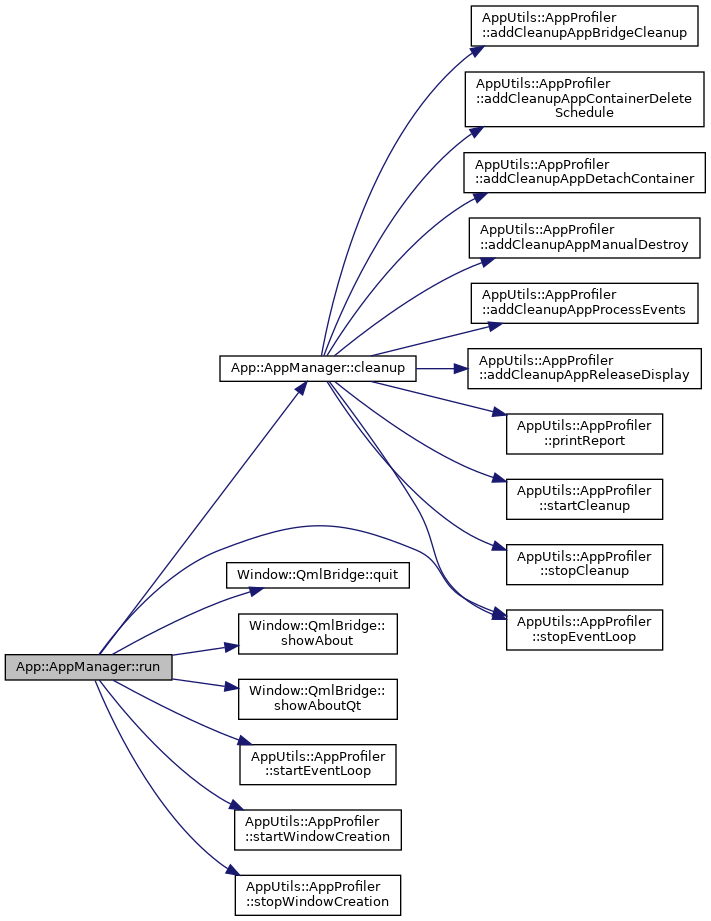
Runs the main application event loop.
Definition at line 73 of file app_manager.cpp.
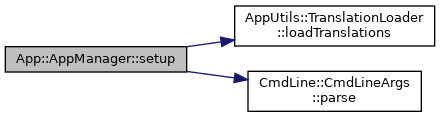
| bool App::AppManager::setup | ( | ) |
Sets up all application components before running.
Definition at line 39 of file app_manager.cpp.

|
private |
The command line arguments for the application.
Definition at line 55 of file app_manager.hpp.
|
private |
The QML bridge for exposing C++ functionality.
Definition at line 57 of file app_manager.hpp.
|
private |
The logger for the application.
Definition at line 53 of file app_manager.hpp.
|
private |
The main window (stored for proper cleanup order).
Definition at line 59 of file app_manager.hpp.
 1.9.4
1.9.4